The eleventh hour ceasefire will see pause to US and Israeli bombings on Iran and Iranian counter-strikes for a period of two weeks, under the core proviso that Iran will provide complete and safe passage of vessels through the Strait of Hormuz. Negotiations on a full peace deal will commence on Friday in Pakistan, with Trump outlining Iran’s 10-point set of proposals for talks, which include the lifting of US sanctions andIranian retention of control over the Strait of Hormuz.
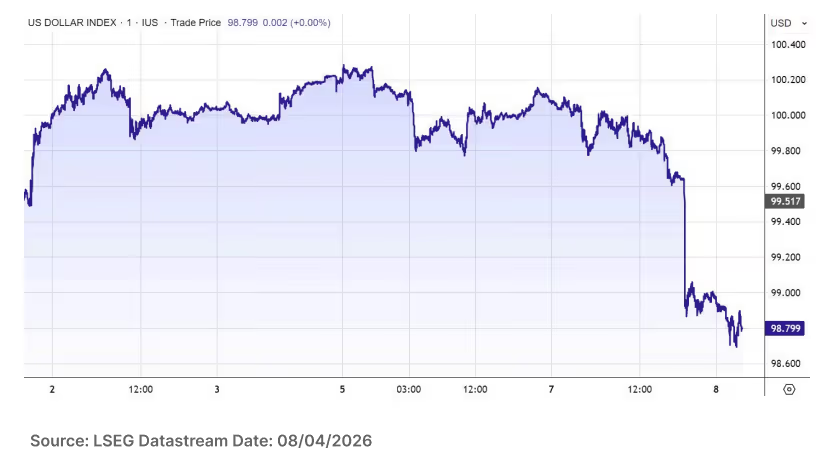
Risk assets have rallied sharply on the news, as while markets were not necessarily bracing for the worse-case outcome, they were not expecting an immediate ceasefire either. Oil futures have pulled back and, in FX, the USDollar Index has slumped around1%, with EUR/USD returning back above the 1.17 level for the first time since the start of the war.
Markets have breathed a collective sigh of relief on the news, with investors thankful that the worst-case doomsday scenario has been averted and encouraged by the promise that oil supply through the Strait ofHormuz will soon resume.Attention now turns to the critical upcoming US-Iran negotiations. The key question will be whether these talks will deliver lasting peace, or ifTuesday’s ceasefire has merely kicked the can down the road.
We suspect that market participants will not fully commit to ‘risk on’ trading, nor will oil futures or the dollar return top re-war levels, until after a permanent deal is struck. As things stand, this is still only a temporary pause in the war and, despite the ceasefire, the dollar is still trading around 1% higher than where it was prior to the conflict.
Read the full analysis to navigate market volatility during the temporary ceasefire.