
The Middle East is at an inflexion point for private markets. The UAE’s regulatory environment and sustained economic growth have made the Dubai International Financial Centre (‘DIFC’) and Abu Dhabi Global Market (‘ADGM’) attractive destinations for international GPs and LP capital. Fund structures are multiplying, and entries that were aspirational several years ago are now operational.
Normally, there is a tendency to overlook the operational setup needed to keep pace in this region.
Treasury arrangements built for funds need to be fast to set up, adept at handling multi-jurisdictional ownership structures, and designed around how funds deploy capital.
In this article, we examine what Middle East fund managers need from a treasury partner and the structural characteristics that distinguish fit-for-purpose solutions from legacy alternatives.
Operational bottlenecks are slowing market entry in the Middle East
Here, we highlight common friction points that consistently create difficulty for fund managers establishing in the region.
- Physical presence requirements: Many institutions still require principals and ultimate beneficial owners (UBO’s) to appear in person to finalise account opening, which can be an obstacle for internationally based GPs.
- Ownership complexities: Multi-layered structures, parallel vehicles and feeder funds across jurisdictions frequently encounter compliance roadblocks and stalled applications.
- Onboarding timelines: Onboarding can span 12 weeks or more, which can be costly in time-sensitive markets.
For a GP raising capital or preparing to deploy into a time-sensitive acquisition, unnecessary friction has a direct cost.
Why fit-for-purpose treasury infrastructure is a functional requirement for Middle East fund operations
While treasury infrastructure is sometimes treated as an afterthought, the right partner can determine how quickly and efficiently a fund can establish and scale in the region. These are the key capabilities that matter:
- Fully remote onboarding: The entire account setup process, from verification, documentation and approval, is completed remotely with no requirement for principals or shareholders to travel to the region.
- Understanding of complex ownership structures: A treasury partner should handle parallel vehicles, layers of LPs structure and UBO chains across multiple regulatory regimes as a matter of ease.
- No minimum balance requirement: Unlike traditional banking providers that mandate minimum or average balance thresholds, Ebury has no such requirements for initiating or maintaining a client relationship.
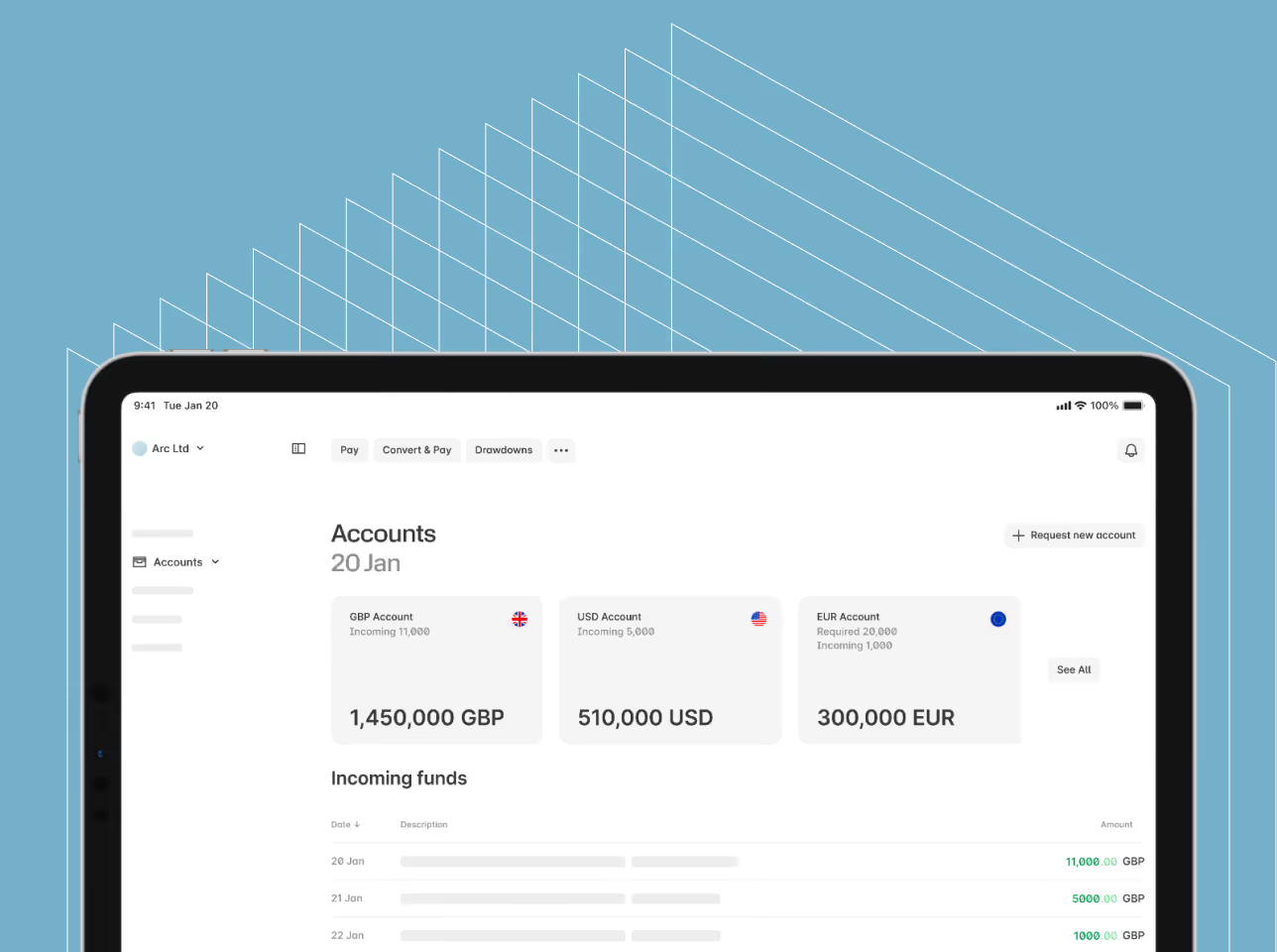
- Named IBANs with multi-currency capabilities: LP subscriptions, cross-border distributions and multi-entity cash visibility can all be managed through a single platform with named IBANs issued across key jurisdictions.
- Relationship management across the fund lifecycle: Have a dedicated point of contact from initial account setup through deployment and final distributions.
From stalled entry to operational account: A regional example
A private equity firm operating alongside ADGM and Cayman structures was moving towards a regional acquisition on a tight timeline. The complexities of the ownership structure and the pace of the deal created onboarding requirements that traditional banking channels were not positioned to meet.
They engaged Ebury, who completed the KYC process entirely remotely, with no travel requirements, resulting in the opening of operational accounts within two weeks, and the acquisition closed on schedule.
The Middle East’s private market opportunities are growing, but realising it depends on having a treasury partner that can help funds establish quickly, operate efficiently and scale with confidence. Ebury Institutional has built its infrastructure around specific requirements for fund managers operating across borders. We work with funds at every stage of the process, from initial market entry to ongoing treasury management across the fund lifecycle.
Let's start a conversation
Get in touch with our experts to discuss your fund's needs and how Ebury can help, or visit our Institutions page to learn more.
Disclaimer
Risk warning & legal notice: For informational purposes only; not financial, legal, or tax advice. Products and services described may not be available in all jurisdictions or from all Ebury entities; availability depends on the entity’s regulatory permissions and applicable local laws. Learn more about Ebury’s legal entities.