Switzerland’s position as a global wealth management hub comes from the strength with which its financial system has been able to attract high net worth individuals and institutional money. Private banks servicing the space traditionally focused on providing wealth management services over treasury services. Making it complex to manage operations such as capital calls, distributions, and transfers across jurisdictions.
Corporate service providers (CSPs) as well as trustees experience this focus on wealth management over treasury in their daily operations through onboarding delays, documentation cycles and payment processes that are not aligned to their needs..
This article looks at what fit-for-purpose treasury infrastructure looks like for Swiss-managed investment holding companies: the operational friction these structures commonly face, and the capabilities that let CSPs and trustees manage them efficiently alongside an existing private banking relationship.
The operational friction facing Swiss investment holding structures
Investment holding companies sit at the center of international wealth and corporate structuring. They bring together private equity holdings, real estate assets and cross-border M&A vehicles. Many sit above international operating businesses, often with layered structures, Special Purpose Vehicles (SPVs) and with ultimate beneficial owners (UBOs) across several countries.
There a few key frictions corporate service providers and trustees are faced with in their daily operations:
- Inter-entity transfers: Routine transfers between holding entities in different jurisdictions and requiring extensive documentation. The time to clear intra group payment ties up working capital and disrupts commercial timelines.
- Onboarding timelines: Structures with several layers, parallel vehicles, or feeder funds across jurisdictions can cause onboarding to span six months or more.
These issues cause Swiss CSPs or trustees to spend significant time managing different bank portals, following up on late transfers, and manually reconciling inter-entity flows instead of focusing on governance.
What Swiss fiduciaries need from a treasury partner
Many Swiss fiduciaries keep their existing banking relationships with their private bank while partnering with a treasury provider to handle international payments, commercial transactions and multi-currency management. The two arrangements operate side by side and assist the fiduciaries in achieving the best possible results for their clients. The following are important key capabilities to watch out for in a treasury provider:
- Tailored onboarding: A treasury partner should know how to support multi-tiered UBO chains, SPVs and investment holding companies in other jurisdictions with ease.
- Frictionless inter-entity and commercial payments: Capital transfers and cash sweeps between entities, commercial operating businesses, and international beneficiaries should be managed through a single platform.
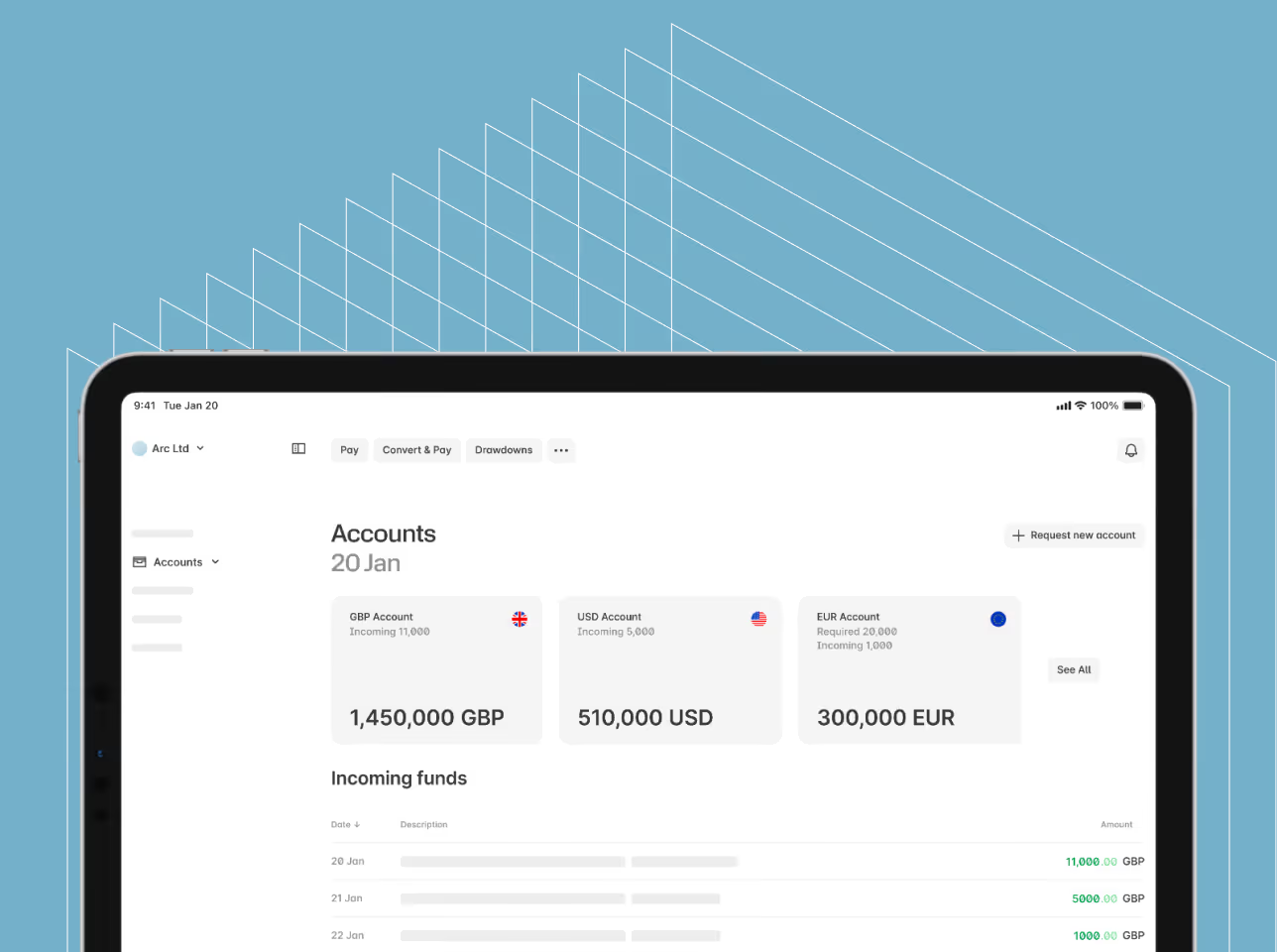
- Centralised multi-entity management: Trust managers and CSPs should be able to manage multiple entities from a single platform with named IBANs issued across key jurisdictions.
- Institutional FX and risk management: The ability to provide active currency oversight and practical risk management tools to support providers to drive fund performance.
Fit-for-purpose treasury in practice: managing a Swiss holding structure
Consider a Zurich-based trustee managing an investment holding company with a layered ownership structure spanning the British Virgin Islands, Luxembourg, and the United Kingdom, sitting above two operating subsidiaries. There are regular capital transfers between the holding entity and its subsidiaries, alongside periodic dividend distributions to beneficiaries in three countries.
For a structure like this, the private banking relationship stays focused on managing the underlying assets. While a treasury partner runs the operational treasury side, working through the ownership chain, clearing transfers between entities, and keeping fund segregation and audit trails in order, all from a single platform that can be accessed through a client onboarding that takes weeks not months.
The takeaways for Swiss corporate service providers and trustees
For CSPs and trustees managing investment holding companies, the practical question is: which parts of the relationship can a specialist treasury partner best serve alongside the private banking relationship rather than in place of it? Ebury supports operational activities for Swiss fiduciaries, freeing trust officers to spend their time on governance instead of payment administration.
Let's start a conversation
Get in touch with our experts to discuss your servicing needs and how Ebury can help, or visit our Institutions page to learn more.
Disclaimer
Risk warning & legal notice: For informational purposes only; not financial, legal, or tax advice. Products and services described may not be available in all jurisdictions or from all Ebury entities; availability depends on the entity’s regulatory permissions and applicable local laws. Learn more about Ebury’s legal entities.