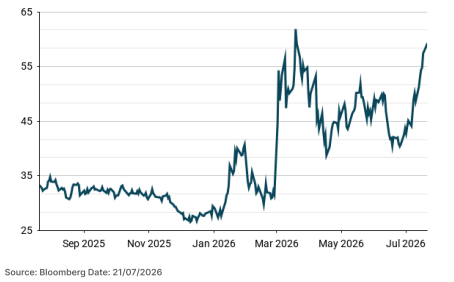
The ECB was afforded some breathing room last month following the signing of the Iran war Memorandum of Understanding. Brent crude oil prices fell to $70 a barrel, around$55 below the April peak, while natural gas prices, which carry outsized importance for the Euro Area, also eased, albeit to a lesser degree. The Euro Area inflation report for June came in softer than expected, adding to the sense that the ECB would not need to tighten policy any time soon. That was, of course, before the ceasefire began to fall apart.
The latest surge in geopolitical instability has created a fresh headache for the ECB, providing the council with every reason to be uneasy. Given how important energy prices are to broad inflationary pressures, the latest uncertainty in the Middle East is a nightmare scenario for central bankers, particularly in the common bloc, which is acutely exposed to imported oil inflation.As it stands, it really is anyone’s guess as to when and if the tensions will actually subside,meaning that the ECB will have little choice but to pause and wait for further clarity.
Stay ahead of the central bank's next move—download our full ECB July Preview.