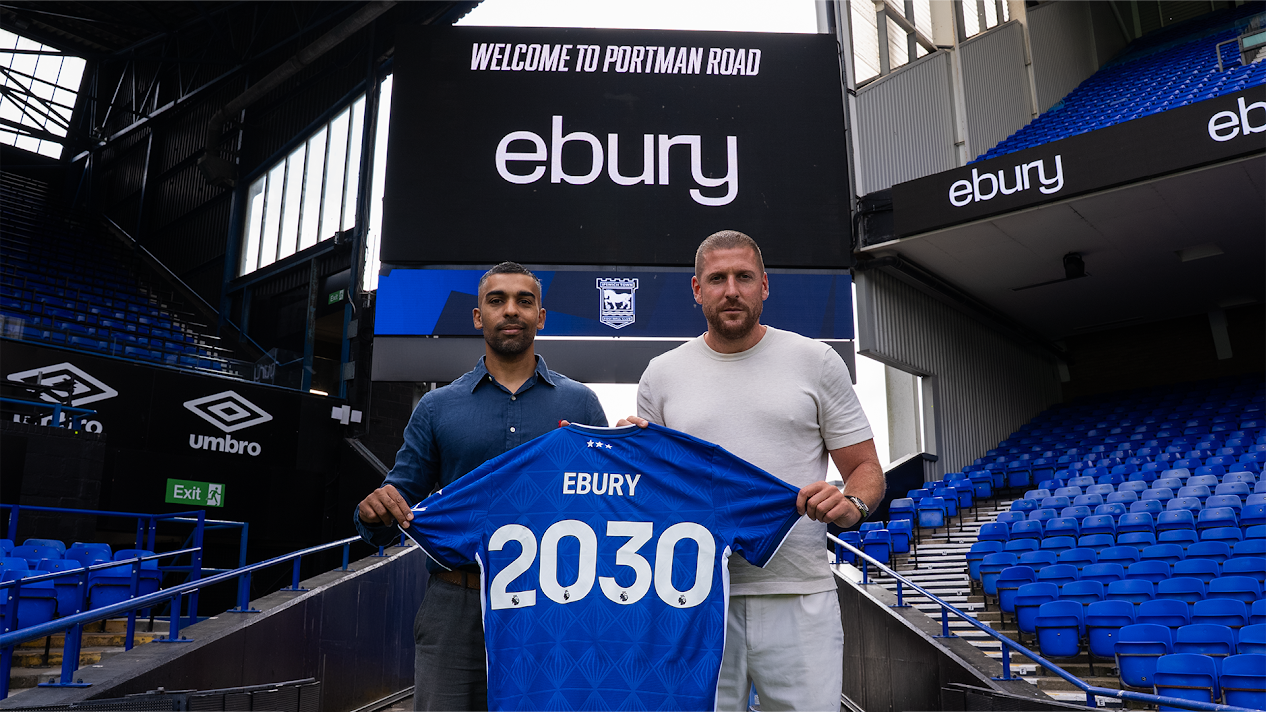
Ebury Sports Finance is proud to partner with three clubs competing in the 2026/27 Premier League season: Aston Villa Football Club, Fulham Football Club and Ipswich Town Football Club. These collaborations highlight how our financial product suite supports world-class sports organisations navigating complex global markets.
Ahead of the kickoff, we examine the major financial trends, regulatory updates, and market challenges every club will face on and off the pitch this season.
Summer 2026 Transfer Spend & Income
Gross Spend & Income: According to Transfermarkt and Squawka tracking until 14 August 2026, Premier League clubs committed €1.94 billion (£1.65 billion) in gross transfer fees while generating €1.13 billion (£960 million) in player sales, resulting in a net spend of €808 million (£690 million).
Outlays Abroad vs. Domestic: Internal Premier League trading dominated the top headlines which has included Chelsea's £117 million signing of Morgan Rogers from Aston Villa and Manchester City's £116 million deal for Elliot Anderson from Nottingham Forest.
However cross-border acquisitions from Continental Europe and South America still accounted for approximately 58% (€1.12 billion) of total spending.
Foreign Recoupment: Only marginally less than 35% of the league's income was recouped from foreign clubs, as domestic transfers between English sides has driven the vast majority of selling revenues.
Ebury Commentary: With the Premier League replacing the long-standing Profitability and Sustainability Rules (PSR) with the new Squad Cost Ratio (SCR) framework, financial compliance shifts from a static test of cumulative three-year losses to a dynamic, real-time limit on squad spending relative to revenue.
Broadcast Deals & Club Earnings
International Rights Growth: Data from Deloitte Sports Business Group reveals that international TV rights for the 2025–2028 cycle bring in £2.17 billion per season, officially generating more revenue than domestic UK rights (£1.675 billion per season).
Guaranteed Baseline: Under the Premier League central distribution system, each of the 20 clubs receives an equal-share baseline guaranteed payment of roughly £89 million annually from combined broadcast pools.
Variable Top-Ups: On top of this base floor, clubs earn £2.6-2.7 million per position higher in the table (merit fees), plus £1.2 million to £1.5 million per live broadcast appearance (facility fees).
Ebury Commentary: Overseas TV rights crossing £2.17 billion per season confirms the Premier League's economic supremacy, generating more international media income than La Liga, Serie A, the Bundesliga, and Ligue 1 combined. (The Esk)
Sponsorships & Gambling Ban
The Ban Impact: The voluntary front-of-shirt gambling sponsorship ban starting in 2026/27 required 11 Premier League clubs to secure new primary kit partners, a huge percentage of each side’s commercial income.
Financial Realignment: While betting companies historically paid a premium, new partnerships with technology, investment, and travel brands created a net commercial funding gap of approximately £80 million to £100 million collectively across affected clubs.
Sponsorship Diversification: To compensate for lost shirt-front yield, clubs increased sleeve sponsorship rates by an average of 18%, mitigating overall commercial revenue losses. (CNA)
Ebury Commentary: The betting ban leaves a temporary dent in commercial budgets, but it pushes clubs to build more sustainable partnerships with global tech and finance brands as a replacement.
Prize Money & Parachute Payments
Central Distributions: Premier League central financial disclosures show total central distributions scale from ~£175 million for the league winner down to ~£109 million for the 20th-placed side.
Merit Pay Escalator: Each position in the final table standings is worth an additional £2.65 million in central prize distributions.
Parachute Safety Net: According to Deloitte, relegated clubs transitioning back to the EFL Championship receive a Year 1 parachute payment equal to 55% of equal-share broadcast revenue (~£49 million to £56 million).
Ebury Commentary: With £2.65 million riding on every single league place, late-season position changes carry genuine financial risk, directly impacting a club's room for maneuver under financial fair play limits.
European Possibilities (UEFA Revenues)
Base Participation: Qualifying for European competitions is not just important for teams on the pitch. UEFA's official distribution model grants every club qualifying for the expanded Champions League league phase a minimum flat base fee of €18.62 million (£15.9 million).
Performance Bonuses: Champions League teams earn an additional €2.1 million (£1.8 million) per win and €700,000 (£600,000) per draw during the 8-match league stage. (UEFA)
Maximum Upside: Reaching the Champions League final, combined with UEFA Value Pillar distributions (media and coefficient metrics), allows top English clubs to generate €100 million to €140 million+ in single-season UEFA income.
Ebury Commentary: Under the new Champions League format, European qualification isn't just for sporting achievement. It is the ultimate financial necessity. It will give clubs the sturtural revenue needed to absorb massive wage bills without triggering domestic spending caps.
Matchday, Merchandise & Fandom Economy
Overall Market Size: The Deloitte Football Money League estimates total ecosystem revenues driven by Premier League fandom (tickets, retail, commercial licensing) to exceed €12.4 billion (£10.6 billion) globally.
Global Audience: With a global weekly audience of 1.84 billion viewers across 189 countries, international retail sales account for over 35% of club merchandise revenues.
Matchday Revenue Trends: Average matchday yield across Premier League stadiums stands at £3.2 million per home fixture, with ticket price adjustments and expanded hospitality lounges expected to drive matchday revenue growth of 5% to 8% this campaign.
Ebury Commentary: With international markets driving over a third of retail sales, Premier League clubs are increasingly operating like global media and lifestyle brands, monetising overseas fan bases far beyond matchday attendance.
For more sports finance insight insight, commentary and updates from Ebury, follow our dedicated LinkedIn page here.