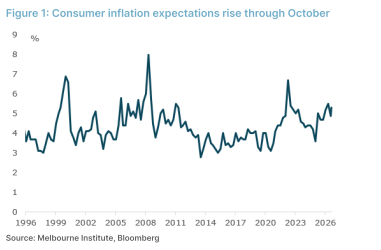
The Aussie ended the week broadly flat, with few catalysts in FX markets to drive a clear direction.Domestically the data was relatively limited, with just consumer sentiment and inflation expectations data released. The WMI consumer confidence index fell 4.7% in October to 80.4,hovering towards record lows.The split in the survey was telling. Respondents interviewed before the RBA’s rate hike registered 86.9, while those interviewed afterwards came in at 67.2 - which at that level would put confidence at record lows.Indeed, with the cash rate at 4.60% and fuel prices remaining elevated, it is likely households will remain downbeat for sometime. Consumer inflation expectations for October was also released,which showed expectations rising to 5.3% from 4.9%.
Whilst this reading is still belowthe 5.9% peak in April, anyfurther signals of expectationsdrifting higher will keep the RBAon alert. And despite this rise inexpectations, our base case isthat the cash rate remains onhold at 4.60% until 2H27, butrisks are skewed to the upside.The September quarter CPI on28 October will carry the mostweight, and a firm print wouldput a hike on Melbourne Cupday firmly in play.Looking ahead, Septemberlabour force data is due onThursday and is the last majorlabour print before the RBAmeets. We expect 20.8k jobsadded and the unemploymentrate easing to 4.5% from 4.6%.The RBA is placing more weighton inflation for now, so the barfor labour data to change theoutlook is high, but a surprisecould still shift its thinking at themargin. RBA minutes is also duethis wee and should show howthe board is weighing inflation,labour and growth.
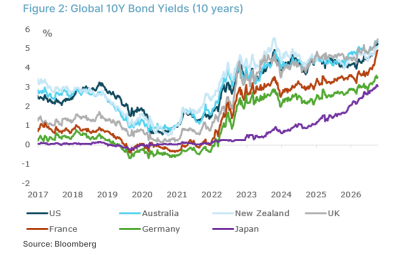
Globally, it was a light week for data, leaving markets to focus on a hawkish read from the Fed, bond yield shovering near multi decade highs and continued tensions in the Middle East impacting the oil market.The FOMC minutes struck a mildly hawkish tone. Most participants saw another hike by year end as likely appropriate, and several judged policy to be only mildly restrictive at best, with economic momentum appearing to build. Many also viewed financial conditions as supportive of growth, pointing to strong equities and tight corporate spreads despite higher Treasury yields.Fed Governor Waller reinforced that message, signalling that further hikes will likely be needed, although there isflexibility on timing. He sees the balance of risks as little changed since the September meeting, with activity strengthening, the labour market broadly stable and inflation risks skewed to the upside. Waller stressed tha the is not greatly concerned that tighter policy threatens a damaging slowdown, but he is wary of inflation re accelerating. He stressed that policy is not on a predetermined path, noting that hikes do not need to come at consecutive meetings but should be in place within an acceptable period of time.Global bond yields were volatile this week but ended modestly lower after hitting multi decade highs. The US 10 year Treasury yield eased to 5.23% from a 24 year high of 5.35%. Yields remain structurally elevated, with markets pricing in rates staying higher for longer on the back of stubborn inflation, rising energy prices and heavy government debt issuance.
On oil markets, Brent crude prices ended the week high eras Iranian attacks raised the prospect of wider hostilities in the Middle East. The pace of attacks in the Strait of Hormuz picked up, with the UK Maritime Trade Operations reporting nine so far this month, including the first inside the Persian Gulf in about a month. Reports that the US was preparing to resume military action added to the tension, while there were reports that the Houth is struck two airports in Saudi Arabia.However, there was some reprieve provided at the back end of the week as President Trump stated that the US will not attack Iran before the 3 November midterm elections, describing talks with Tehran as productive. The pledge helped temper rising crude prices after reports that Washington was weighing new strikes, and the blockade remains in full force.President Trump also claimed 22 million barrels moved through the Strait of Hormuz in a single night, with none going to or from Iran, though that figure has not been independently verified. Before the war, roughly a fifth of the world’s oil and LNG passed through the strait, and it was all but closed after the US and Israel struck Iran in late February.